Call it a feminist movement or “a new wave of women in politics.”
Sebahate J. Shala
As we’re heading to the end of the Women History Month, let us remember some of the women’s biggest achievements that marked the year we just passed. Yes, 2018 was the Year of the Woman—referring to the highest representation of women in the U.S. Congress since 1992, totaling at 127, as well as the unprecedented rate of women running for the office across America. 11 women got nominated for governors, the most female nominees for governors in a single year. It was an election of many firsts—and above all—the election about change. “None of us ran to be the first of anything…We ran to make a difference,” Rep. Ayanna Pressley (D-Mass.) told Politico in an article, We Call Ourselves the Badasses.
The Year of the Woman didn’t stop in the United States, though. We’ve seen a staggering number of women running for the office worldwide. Bolivia, Ecuador, Costa Rica, and Nicaragua created an “admirable” gender representation in their respective parliaments, in Lebanon, the number of women candidates increased more than eightfold same as in Mexico, when nearly 3,000 women run for the office. Sri Lanka elected 2,000 women out of 17,000 running candidates and Ethiopia approved the first female president—with the first-gender balanced cabinet in the history.
Nobel Prize, on the other hand, recognized—for the first time—the use of sexual violence in conflict as a weapon of war by awarding Nadia Murad, a survivor of sexual violence, to a Nobel Peace Prize. The Nobel laureates in Physics and Chemistry are women, too: Donna Strickland and Frances H. Arnold. Yes, the Oscars went to 15 female artists, breaking the records of all times, and yes, the Youth Olympic Games in Buenos Aires reached the gender parity representation—in the field of play and within the organizing committee.
Wow, what a year!
Globally, we’ve seen a surge in women activism from Latin America to the Middle East. Women have become a significant factor in shaping policies, practices and conversation on—once regarded as taboo issues—as well as champions of defending victims of human rights violations. They’ve become game-changers in their respective societies. In Chile and Ireland, including Argentina, women’s movements gained momentum by abolishing abortion, and Uruguay witnessed the first conviction for femicide. In Israel, Palestinian and Jewish women rose up to end the impunity of those involved in violence and murder of women. And there were cases, too, where prominent politicians and human rights activists became the target of the government, like in Egypt, or were murdered, as happened in Brazil and Ukraine.
In the U.S. #MeToo movement brought down at least 201 powerful men, and—ironically—nearly half of their replacements, as the New York Times indicates, are women. More than ever before, women stood up for their rights and spoke out loudly in their quest to end violence and harassment in the workplace, receiving equal pay for equal play and for more diverse representation in positions of power. And, the best part of the story is that they “are not only speaking out but are being heard.” Noting that these “silence-breakers” were named as the Time’s 2017 “Person of the Year.”
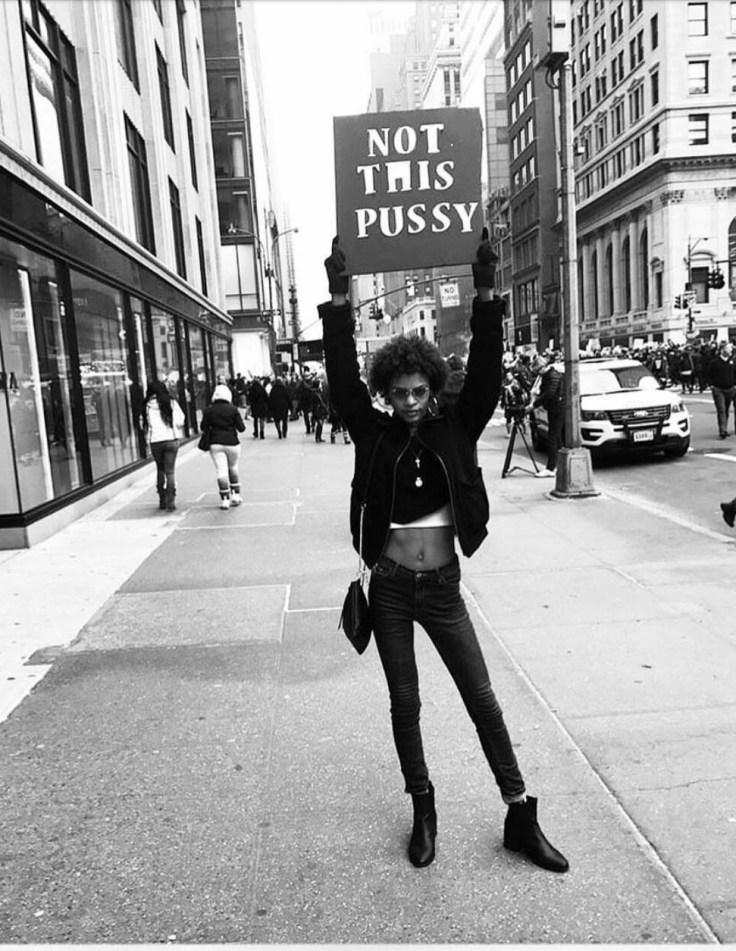
Generally, the America’s women uprising came in response to Trump’s bigotry and misogynist approach and his derogatory language used against women during the campaign trail, and particularly, to confronting the Republican Party’s harmful policies towards women’s rights, and more recently, to rejecting the appointment of Brett Kavanaugh as the Supreme Court justice, following the allegations of rape against Christine Blasey Ford. All of these in addition to allegations of sexual harassment against women involving corporate, media moguls and Hollywood stars.
It is—without a doubt—the time to celebrate “women” despite tremendous resistance they’ve faced, locally and globally. But, hey women, we’ve still a way to go.
Let’s talk about numbers. The number of world female leaders—although more than doubled since 2000—is still low, representing fewer than 10% of 193 UN member states. As of March 2017, 15 women, according to the Pew Research, were the firsts of their countries, nine heads of state and eight heads of government. This list excludes three notable female politicians—that of Myanmar, Taiwanese, and the South Korean ones. Currently, German Chancellor, Angela Markel, is deemed as one of the most powerful female politicians in the world—known also as the liberal west’s last defender. In the U.S., this position is held by Nancy Pelosi, and Christine Lagarde leads the world’s most important financial institution—the International Monetary Fund.
- The Dark Side of the Story: Women on the Run
As we applause women’s breakthrough in both—science and politics—we do, too, show empathy for women’s sufferings and ordeals, respectively women—victims of sexual violence and domestic abuse as well as refugee and migrant women. The conflict-related sexual violence, as the UN Secretary-General, Gutierres warns, continues to be employed as a “weapon of war”—in most conflict settings from the Middle East to Africa. The figures, according to the ICRC, are alarming; yet, no official data of its occurrence is out there.
Remember, over 20,000 Kosovar women—victims of sexual violence during the war in 1998-1999, have yet to receive justice.
Migrant and refugee women or Women on the Run, as the UNCHR refers to, are usually the most vulnerable populations to the crime of sexual violence. Since 2015, thousands of women from Central America, El Salvador, Honduras, Guatemala, and Mexico, have been “beaten, raped, and too often killed along the way” while seeking to escape a “surging tide of violence” in their home countries, the agency reports. Once in the U.S., meanwhile, they might end up being jailed, separated from their children and even raped. The Intercept reveals stories of many Central America’s women subjugated to sexual and physical abuse by the Immigration and Customs Enforcement (ICE) agents or fellow detainees in Florida, Texas, and Washington. Based on the Intercept’s accounts, the DHS Office of Inspector General received some 33,000 complaints involving the ICE custody incidents between 2010 and 2016.
Remember, through similar horrifying experiences had gone migrant women from the Middle East and Africa en route to Europe during mass exodus in 2015-2016. According to the International Organization on Migration, 80% of 4,371 women and girls from Nigeria were victims of rape, slavery and sex trafficking while entering Italy. Similar accounts unfolded Amnesty International, too, relating to Libyan migrant women.
And, we do also remember the Rohingya’s plight, right? The Muslim population of Myanmar that fled systematic rape, destruction, and indiscriminate violence erupted in late August 2017, which the UN described as a “textbook example of ethnic cleansing.” We, too, heard the news on the systematic brutal rapes and human trafficking of Rohingya’s women and girls in an attempt to escape the military offensive in Rakhine. And, the irony is that a female leader, Aung San Suu Kyi, the incumbent State Counsellor and a Nobel Peace Prize laureate, has kept one-eye closed while the horrendous stories of these women came into the surface.

Remember, these women are running away from either—the brutality of their governments or violent intimate partners. Latin America tops the rank for the highest female murder rate in the world: El Salvador ranks first, Guatemala third, and Honduras seventh. According to the UN Office of Drugs and Crime, 87,000 women worldwide were intentionally killed in 2017—30,000 by their intimate partners.
In the U.S., nearly 20 people per minute are physically abused by an intimate partner: 1 in 4 women. 94% of all murder-suicides involving intimate partners are female victims. A forcible rape in the U.S. occurs every 6.2 minutes. 188,380 cases of rape or sexual assaults were reported in 2010.
- On the “Spotlight”: Women and Politics
My ambassador to the U.S is a woman same as the one to the UN, and I proudly introduce myself as originating from a country with the first woman president. A Kosovo woman won the Olympics last year, another one climbed the Mount Everest while three others received the International Women of Courage Award given by the State Department. Legally, the country has regulated the gender balanced representation in public institutions. In practice, however, women are underrepresented. Currently, 38 women out of 120 serve as members of the Parliament. Only one woman serves as minister out of 23 ones and six others as deputy ministers out of 70 members of the Cabinet. All municipalities are led by men.
Kosovo, however, doesn’t make an exemption.
The U.S., for example, stands below the average (23-25%) on the women representation to the Congress in the list of Inter-Parliamentary Union. Just reminding that America failed to elect a woman President in the 2016 election. Statewide, female Americans comprise up to 25.5% of Senate seats and 29.7% of state house seats; only six women serve as governor of 16 running candidates in 2018. The share of women in Cabinet-level positions, which peaked during Clinton’s second term to 40.9%, dropped to 26.1% during Trump administration and to 21.7% following Nikki Haley’s resignation. Haley’s resignation left only five women in Trump’s cabinet of 17 men. The percentage of parliamentarian women across the UN nations, meanwhile, oscillates between 48-49% in Mexico (304 seats) to 2.7% (4 seats) in Yemen.
…the UN—within the reach
The UN, on the other hand, has yet to reach gender parity throughout its system. Despite a number of resolutions on the gender balance representation, the process “is still insufficiently rapid,” remaining within the reach of 50:50 culture, a report of the UN Women Under-Secretary-General Executive Director, Mlambo-Ngcuka, suggests. So far, only five entities have achieved or exceeded the overall gender equity at the professional levels or higher, including the UN Women and UNESCO, while the majority are within 10 percentage points.
Of the UN bodies, the Security Council remains a bastion for men. Currently, two countries—the UK and Poland—of 15 members are led by women. The gender imbalance is reflected more in the UNSC meetings. In a timeframe from 1994 to 2018, involving more than 50,002 meetings, the U.S. was represented by a woman “a little less than half of the time,” France and the UK—around 10% of the time or less than average for all SC members whereas China and Russia around 1% and 0% respectively.
- Women in the Ecosystem: The U.S. and Global
In the global level, women constitute the largest population for being unemployed and underemployed, subject to sexual harassment and discrimination in the workplace, and from being restricted from having the same choice of jobs as men. Generally, participation in the global workforce is declining. In 2018, the women labor force participation was 48.5% vs. 51.4% in 1990 compared to men with 75% vs. 80% in 1990.
In 2017, global unemployment rates for men and women were 5.5% and 6.2% respectively; the gender wage gap is estimated to be 23%. “This means that women earn 77% of what men earn,” according to the UN Women. The data on women aged 25-54 participation in the labor force is even more disappointing: 63% vs. 94% for men (2018). Over 2.7 billion women worldwide, meanwhile, are legally restricted from having the same choice of jobs as men: in 104 of 189 economies, women are legally prevented from working in specific jobs; 59 economies lack laws on sexual harassment in the workplace; and in 18 economies, women are legally prevented from work from their husbands.
Likewise, the U.S. economy has seen little change regarding gender wage gap over the last decade. The wage disparity has decreased only by two percentage points between 2008 and 2017, as a result of which, American women lose $513 billion yearly, earning 80 cents on average for every dollar that a man earns. In a total, the labor force participation among U.S. women fell by 3.5 percentage points between 2000 and 2016 or 57.2% in 2016—meaning that 4.6 million fewer women are in the labor force.
The employment status and payment rate same as the promotion to managerial positions, however, depend on which category you belong to—as a woman, woman of color or immigrant. Hurdles and obstacles also vary based on this categorization. Being a woman means being measured based on different standards even when running for the highest office in the land. Hillary Clinton is the best illustration of gender discrimination in America. On her book, What Happened, Hillary reminds us how media and pundits applied double-standards during the election campaign—by often judging her voice, appearance, and dressing—and overreacting on her email scandal while overshadowing her rival’s bigotry, misogyny and sexual assaults against women. “But her emails…”
Yet even worse is when you happen to be a woman of color. Former First Lady, Michelle Obama, tells us on her Becoming, how–while she was held as the most powerful woman in the office–she yet was called an “angry black woman.” “I’ve wanted to ask my detractors which part of that phrase matters to them the most—is it ‘angry’ or ‘black’ or ‘woman’?”
And definitively, your status is a way too worse if you happen to be a woman immigrant. Female immigrants, making up to 21 million or 13% of the American female population, are less likely than native-females to be in the labor force (56.2% vs. 59.0%); they earn less–$32,000 vs. $39,000 yearly; they are more likely than the natives to live in poverty (19.7 vs. 14.7%); and they are less likely to work in managerial or professional occupations (32.7% vs. 41.1%).
Similarly, women of color, as a 2018 survey found, are significantly underrepresented, are far less likely than others to be promoted and more likely to face everyday discrimination. And surely, they earn less than all other women—although they have a higher participation rate in the labor force. According to the U.S. Census Bureau, a full-time working black woman earns only 67 cents while a full-time working woman (non-Black) earns about 80 cents for every dollar a man does. The pay range for black women varies from 48 to 68 cents for every dollar paid to white, non-Hispanic men in 25 states, including Washington. The median wage is 36,735 per year compared to the median wage of $60,388 annually for white, non-Hispanic men, or $23,653 less yearly.
Factors to female’s underrepresentation in the political and economic system, nationally and globally, and regardless of race, ethnicity or political status, range from structural barriers to cultural and systemic restrictions and hurdles to lack of employment opportunities, education level, and legal gender differences in both developing and developed economies. The Harvard Business Review mentions the unconscious bias, too. In some cases, women pose obstacles to women by not supporting, preventing or sabotaging each other’s promotion in the workplace. This brings me to the famous quote of former Secretary of State, Madeline Albright: “There’s a special place in hell for women who don’t help each other.” And there it is!
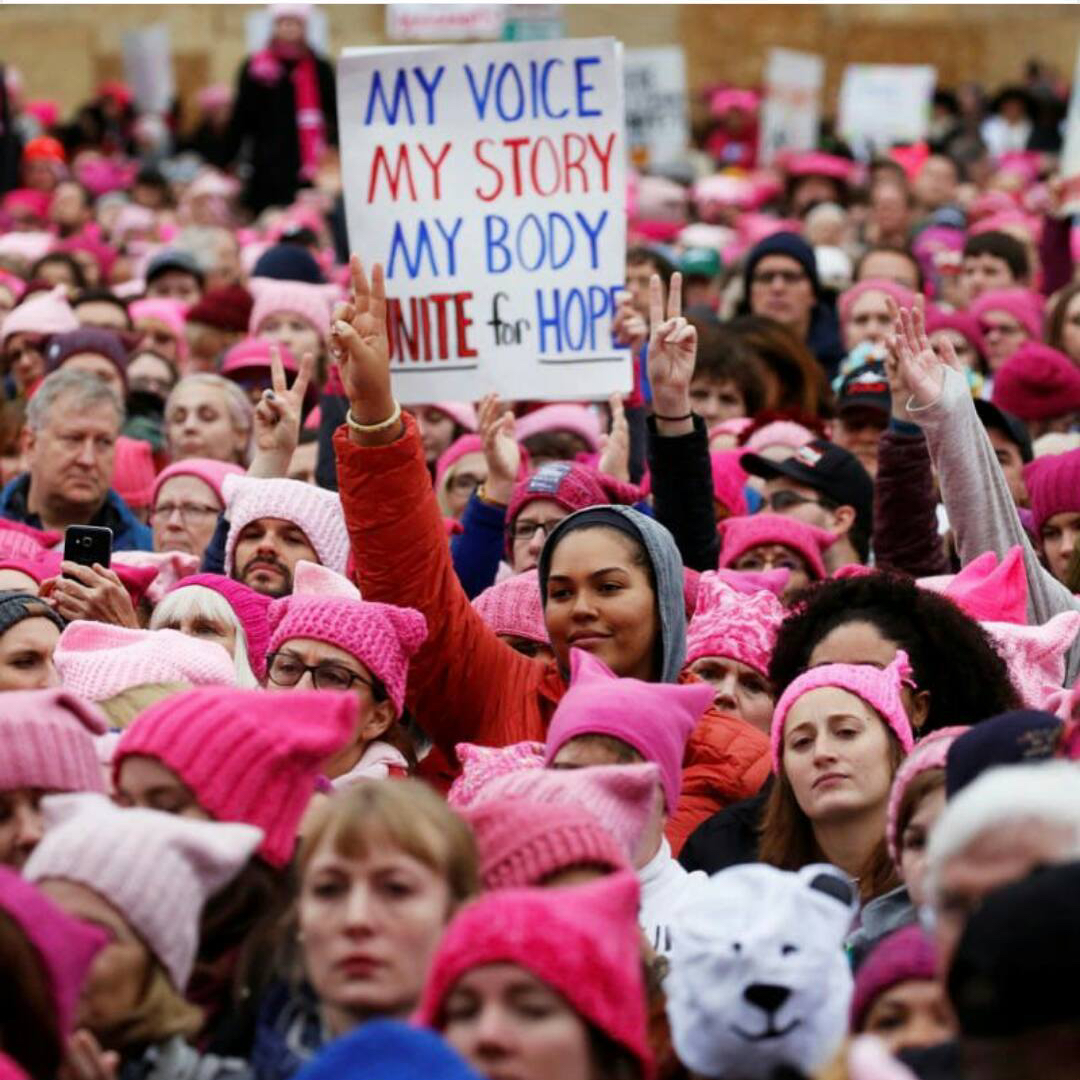
It is with no doubt that women will continue fighting and thriving. Because, losing, as Hillary’s case shows us, often serves as a motivation of rising. That’s what exactly happened after the 2016 U.S. election. January 2017 witnessed the largest march of women across the world. The 2018 election proved that by breaking all records for the women representation in the Congress. It was a reverse process. As Hillary put it, “I was heartened that a wave of women across America has expressed more willingness to run for the office. I admit, I was worried that it would go the other way around.” Because women know better how to rise up, rise up, rise up…
…they rise up as harder as they try to put them down, they rise to the sky (…), they rise up unafraid (…), and I’ll do it a thousand times again, like the waves, in spite of the ache (…) and move mountains…
(Andra Day’s songs “Rise Up” featuring a CNN documentary “We Will Rise” in a campaign of Michelle Obama to educate girls across the world).
And Beyonce continues:
…I am the dragon breathing fire (…), I’m not broke and I’m not crying (…), I’m keeping running cause a winner don’t quit on themselves… (Lemonade).
 WAR AND PEACE
Leave a comment