
Sebahate J. Shala
(This article has been written for the World Mediation Organization, part of an online course on Mindful Mediation and Conflict Management)
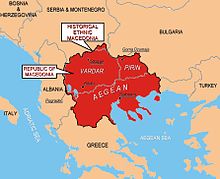
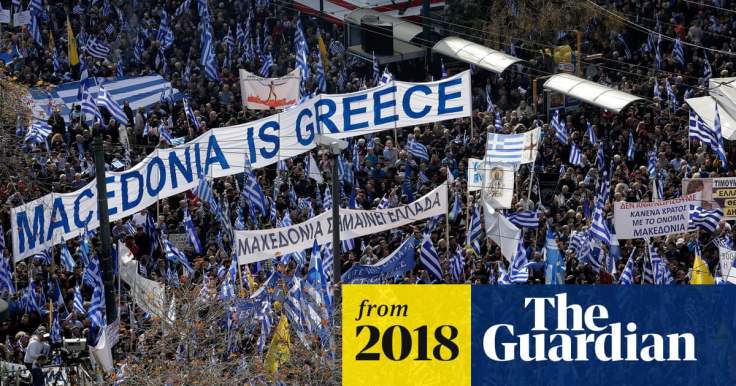
The protracted conflict between Macedonia and Greece over the name of Macedonia involved many actors and players, direct and indirect, each seeking to take its share on the cake. The main actors in one of the long-lasting disputes in the world over history, identity and territory have been—up to recently—Macedonia and Greece. There have been other actors and bystanders—indirectly engaged in conflict—including Bulgaria, Serbia, Kosovo, as well as Russia. Nationalist groups in the Balkans have played their part, too. Fortunately, the dispute ended last year following “Prespa Agreement” on Macedonia name change—signed in June 2018 between leaders of Macedonia and Greece, Tsipras and Zaev, under the UN auspices. By January 2019, two respective parliaments ratified the deal, paving the way for Macedonia to change its name to “North Republic of Macedonia” and moving forward with EU-NATO integration processes. It was a long road.
The conflict over the existence of Macedonia is almost three decades old. Some analysts, however, take as a reference point the year 1944, when federal leader, Josip Broz Tito, created the Federal People’s Republic of Yugoslavia by incorporating Macedonia, then part of Serbia, as a constituent republic. Others go back to the Balkans Wars in 1912, as a result of which Macedonia was divided between Greece, Bulgaria and Serbia. The conflict resurfaced in 1991 following Macedonia independence, an act that met huge resistance from neighboring countries—Greece, Bulgaria and Serbia, which contested Macedonia history and identity as a distinct state. For Greeks, the notion of a distinct Macedonian nation was inexistent as Macedonia was an artificial creature of Tito. Furthermore, the use of Macedonia name, according to Athens, suggested Skopje has territorial claims to Greece’s northern region of Macedonia. Similarly, Bulgaria, which eventually recognized Macedonia independence, denied the existence of a distinct Macedonian language. Based on the Bulgarian claims, the Macedonian language is a dialect of the Bulgarian language. Serbia, on the other side, assumed that the Macedonian language is a dialect of Serbo-Croatian language, denying the Macedonian linguistic distinctness. In fact, the Macedonian language is closely related to both Bulgarian and Serbo-Croatian languages, and according to some sources, it had been intentionally Serbinized when Macedonia was part of Serbia.
The quarrel over the Macedonia identity has now ended. By all measures, sealing a deal was a historic moment not only for Macedonia and Greece but for all countries in the Balkans region. The real winners in this contest are North Macedonia and Greece. For Macedonia, the name resolution is vital as it helps preserve its national identity as well as territorial integrity and political stability—challenged by its neighbors. This act opens the door for the country to become a full member of NATO and resume negotiations on the EU accession—blocked or halted by Greece. From broader and long-term perspectives, the dispute resolution contributes to peace and stability in the Balkans, a region known for its ongoing inter-ethnic clashes such as the one between Kosovo and Serbia on Kosovo final status.
The resolution of Macedonia name is going to generate benefits for Greece, too, on both geopolitical and economic levels. By ending this dispute, Greece leadership demonstrated its commitment to peace and stability in the region. The leadership showed its dedication to achieve the country’s geostrategic objectives to becoming, as Prime Minister Tsipras declared, “a leading force in the Balkans and the East Mediterranean.” Moreover, this decision marked the end of endless political crisis caused by Greece since 1991, and also gave a huge contribution to the heeling and national reconciliation processes in the respective societies. On the economic level, prospects are high and benefits huge. Greece is one of the biggest foreign investors in North Macedonia, controlling the country’s sole oil refinery and operating with the second-biggest bank. That said, the dispute resolution affirms both countries’ national interests, is less costly and generates huge benefits.
There are losers, too. Here can be included Greece-North Macedonia neighbors, which might have had hidden interests, i.e., Bulgaria, Serbia and Kosovo, and nationalist groups originating from almost all countries, as well as Russia. What could Bulgaria, Albania and Kosovo have benefited from a protracted conflict between Macedonia and Greece? Well, Bulgaria might have demanded its share since parts of Macedonia once belonged to Bulgaria, but the government has denied any territorial claims towards Macedonia. The ongoing issues are mainly linked to controversial interpretations regarding history and language. Bulgaria authorities have accused Macedonians counterparts for falsifying history and imposing a Macedonian identity and language not only within Macedonia but also in the Bulgarian territory. According to them, “Prespa Agreement” clarified the existence of a separate Macedonian language, an idea that Bulgaria has long disputed. In an exchange with Macedonia’s Prime Minister, Zaev, Bulgaria Defense Minister, Karakachanov, threatened its neighbor to withdraw its support for Macedonia’s Euro-Atlantic integration following claims about the existence of the Macedonian language.
What might Albanians benefit from the dispute between Macedonia and Greece and what might be their interests? Officially, Albania and Kosovo have denied any intentions for territorial claims against North Macedonia, which could lead to the unification of Albanians in one state, known as the “Greater Albania.” Occasionally, there have been some provocative statements given by President of Kosovo, Thaci, that any partition of Kosovo might have domino-effect in Balkans as Albanians would seek to fulfill their right to self-determination to live in one state. This could automatically improve the geopolitical position of Albanians in the Balkans: Albania would become the leading geopolitical factor in the Balkans region because of the number of population, territory and geostrategic position. Momentarily, this project is off the table for both governments and moderate political parties. For nationalist-oriented parties in Kosovo, Albania and Macedonia, this is not a dead project, though. The unification of Albanians in one state remains their final goal. Given that Macedonia is still regarded as an artificial creature with no ethnic majority, Albanians as the second major group, might rise, as it happened in 2001, and join the territory of Kosovo in case North Macedonia denies their rights to full citizenship.
Other losers include nationalist groups in Macedonia and Greece, as well as nationalists-oriented politicians in both countries who built their political careers on this issue, as well as nationalists movements that survive by seeking new enemies. One of the biggest losers, however, is Russia. In the last decade, Russia has struggled to expand its influence in the Balkans, creating zones of influence, meddling in elections and by using Serbia as a transit route. Historically anti-NATO, Russia has increased its efforts to block—initially its neighbors—and then its allies in Balkans in their paths towards NATO integration. There are claims that Russia backed nationalists in the region, seeking to delay Macedonia’s NATO membership. With Macedonia in its road to NATO, and Montenegro, Albania and Croatia already onboard, Russia seems to lose the game. This country has geopolitical and economic interests in the Balkans, aiming to bring back to the club once-zones-of-interests by instigating a new cold war with the US. If not politically successful, economically, Russia has plans to “conquer” Europe through its energy giant “Gazprom.” The giant has already started to build the Turkish Stream gas pipeline in Serbia, which is supposed to transport gas through Bulgaria, Serbia, Hungary, and Austria. On the commercial level, as the Foreign Policy argues, the pipeline helps cement “Gazprom” position in Turkey while geopolitically, it bypasses Ukraine, currently the main transit route for Russian gas to Europe, and deepens Russia strategic partnership with Turkey.
World Mediation Oeganization: https://worldmediation.org/macedonia-greece-dispute-over-the-name-of-macedonia/
 WAR AND PEACE
Leave a comment