The story of a courageous woman lives on.
Sebahate J. Shala
TODAY, I want to remember Marte Tunaj, the first woman who publicly testified against rape and other sexual violence crimes carried out by Milosevic regime in Kosovo. Today, I want to honor her for bravery and courage to come forward and tell the truth to the world. Today, I applause her for tenacity and perseverance to seek justice for all women and girls—victims of conflict-related sexual violence. Today, I praise her for her struggle to receive justice from Serbia and recognition as “victim of the war” from Kosovo—while fighting social stigma and humiliation. Today, I feel her ordeal, her pain, her sadness, her suffering, her disappointment in the road to justice. Today, I Am Marte.
For many women, Nana (Mother) Marte represents a symbol of courage. She personifies bravery and heroism, willing to confront pain and danger without feeling of fear. Her story is that of an extraordinary woman—who went from a contributor of war to a raped woman to a fighter for justice and defender of victims of sexual violence to a traumatized, ill mother. She rose above and beyond herself to defend women who suffered stigma and humiliation, injustice and discrimination due to their past.
On May 30, 1999, Marte Tunaj, born in Gjakova and married in Vitia, was taken by Millosh Jokiq, a Serbia paramilitary who operated in Vitia—and under the threat of knife and other weapons—was forced to have sexual intercourse with him without her consent. “I refused with all of my strength but he took the knife and by threatening to use it, he raped me.” Her life would change forever. She was broken but never submitted herself to the perpetrator’s will (RajoniPress, August 5, 2013).
It is supposed that over 20,000 Kosovar women and girls were sexually abused from the former Yugoslavia and Serbia armed forces during the NATO bombing campaign against Serbia through March—June 1999. The Human Rights Watch documented 96 cases, suggesting that the real number was far higher (2001). Unfortunately, the exact figure will never be known. What is known however is that women and girls were dragged from the refugees’ columns and then raped, sometimes repeatedly, before they were sent on their journey. Others in their homes, often in presence of their family, or in temporary shelter they found for their dependent children and elderly parents (Amnesty International, 2017).
The Road to Justice: Triumphant—with Unfortunate Ending
IT was hard to tell the family the truth. She secretly gave a testimony against Jokiq—who was immediately arrested by international military forces in charge of sexual violence, including war crimes against civilian populations in Vitia, a city of Gjilan, south of Kosovo. Her family—including her husband—learned the truth on the day of trial. “I want everybody here to know today, my husband, my family, and journalists…,” she began her testimony before the jury in Gjilan Court led by Patrice de Charette. Millosh Jokiq was found guilty and sentenced to 20 years in prison. Justice was served. “I gave myself a duty to denounce Jokiq for the sake of many women and pregnant mothers whom he abused, and for the sake of my son, the youngest soldier in Kosovo Liberation Army.” (RajoniPress, August 5, 2013)
Her triumph won’t last long, though. In 2002, Jokiq was released and returned to Serbia after appealing the case and following an agreement of then-the head of UN Mission in Kosovo (UNMIK) Hans Haekerup signed with Serbia authorities to exchange prisoners. The news was devastating, leaving an indelible trace to her ever since. Yet, she won’t give up. Nana Marte continued fighting, promising to sue her perpetrator in an international court—along with UNMIK administration, for, as she said, “trading our feelings with Serbia.” “It’s a shame for Kosovo government to offer amnesty for Jokiq. He should have never been pardoned.” (RajoniPress, May 04, 2008)
War in Two-Fronts: Seeking Justice from Serbia, Fighting Stigma in Kosovo
IF there is any injustice in the world, it is against survivors of sexual violence in Kosovo. Ignored, rejected within and without Kosovo, ostracized and—until recently—denied the rights of “victims of the war.” Here comes the bitter narrative!
UNMIK and EU Mission of Rule of Law in Kosovo (EULEX) have failed, as Amnesty International documents, in their responsibilities to investigating and prosecuting crimes of conflict-related sexual violence in Kosovo: rape and other sexual violence crimes weren’t a priority for international stakeholders (2017). UNMIK—despite a large documenting files—failed to issue any war crimes or crimes against humanity cases on sexual violence (Amnesty International, 2008); it failed to promptly open effective investigations regardless of the existence of survivors’ testimonies, speaking of multiple incidents of violent rape, most often by several perpetrators—Serbian police, paramilitaries or Yugoslav Army soldiers—amounting to war crime of torture and crimes against humanity of rape; the mission failed to inform survivors of any progress in their cases (Id., 2017). And oh, UNMIK made no efforts to adopt a gender-based and sexual violence approach, such as in Sierra Leone for example, due to its unwillingness as well as lack of expertise, capacity and training to deal with wartime rape survivors in Kosovo (Id., 2008).
EULEX followed the same path, failing to investigate hundreds of war crimes cases backlogged by its predecessor, including rape and other sexual violence crimes. EULEX prosecuted only two cases of rape (Amnesty International, 2017), totaling at four, including the recently opened cases against two Kosovo Serbs (BIRN, March 16, 2020). Likewise, the International Crime Tribunal on Yugoslavia (ICTY) concluded two cases only: one against three most senior political and military Serbia officials on war crimes and crimes against humanity in Kosovo along with sexual assaults as form of prosecution and as a crime against humanity, and the other against a senior official on prosecution through sexual assaults as a crime against humanity (Amnesty International, 2017).
The Special War Crimes Chamber in Serbia, on the other side, tried two cases of rape in Kosovo against former Kosovo Liberation Army (KLA) members, only one resulting in conviction, whereas the Special Prosecutor of Kosovo (SPRK) prosecuted three cases, each resulting in acquittal (Id.). As Kosovo Prime Minister on duty Albin Kurti said in the Parliament last month, “22 years after the war in Kosovo, there IS NOT EVEN ONE final judgement conviction on rape and other sexual violence crimes. NONE. We have verdicts on the first instance, being reversed and appealed. This, regardless the fact that, we have women and men who testified either publicly or to the prosecution.” (The Government of Kosovo, March 09, 2020)
The increasing concerns on the missing evidence once submitted to UNMIK, lack of political commitment as well as lack of capacities and resources in Kosovo, the continuing culture of impunity in Serbia—in addition to silence of women due to stigmatization—raise doubt if such crimes will ever be prosecuted.
Failed by UNMIK, failed by EULEX, it is not surprising that few survivors have any faith in Kosovo’s own justice system—Amnesty International, 2017.
The fear of identity revelation, according to Waters, was one of the main reasons why many Kosovar women refused to testify against Milosevic in the Hague: those who testified as anonymous witnesses, meanwhile, though protected while at the Tribunal, were revealed back home as a result of which many threatened to commit suicide (2013).
The Foreign Policy’s Kristen Chick cites one of the victims—gang raped by Serbian forces in central Kosovo region—who fearing humiliation, suffered in silence, then tried to commit suicide. When her son found out, he had one question for her: “Why didn’t you ask them to kill you instead?” As Chick put it in, Ending the Shame of Kosovo’s Rape Victims: “The stigma against sexual assault stemming from traditional beliefs that link a man’s honor to the sexual purity and physical safety of his female family members, still runs deep here.” (February 22, 2016)
Reparation, Recognition, Public Apology: None for Marte Tunaj
RAPE and other forms of sexual violence have historically been, and continue to be “invisible” and “silenced”—notwithstanding the alarming figures of their occurrence on global scale. The feeling of guilt or shame, fear of retaliation, stigma or social isolation, material barriers, and lack of transportation—are the main factors (Gaggioli, 2015). Traditionally, the international law has given inadequate consideration whilst the international humanitarian law failed, up to recently, to explicitly characterize, codify and prosecute this crime, recognizing it more as a “byproduct of war” rather than a serious international crime (Mitchell, 2005).
The international jurisprudence of sexual violence crimes however has remarkably evolved from the definition of rape as a violation of “honor” to a crime against “the bodily integrity and human dignity” (Koeing, Lincoln, and Growth, 2011) to “war crime, genocide, and crime against humanity” (Ellis, 2007) to “threat to international peace and security.” (UNSC 1325/2000) Nevertheless, the situation on the ground remains dire. The conflict-related sexual violence, as the UN Secretary-General Antonio Guterres warned, continues to be employed as a “tactic of war, with widespread and strategic rapes”—in conjunction with other crimes and committed by several parties to conflict—from the Middle East to Africa to Latin America (S/2017/249).
Legally, the status and rights of victims of sexual violence are internationally recognized, accordingly, victims are entitled to five forms of reparation: restitution, compensation, rehabilitation, satisfaction, and the guarantee of non-repetition (UN General Assembly A/Res/60/147). The ECOSOC Resolution 2002 proposes the inclusion of restorative justice programs in criminal matters as part of transitional justice processes such as providing victims the opportunity to obtain reparation, feel safer and seek closure, allowing offenders to make amendments to victims and take responsibility for their crime, and enabling communities to understand the underlying causes of crime and promote community wellbeing and reconciliation (2012).
Woefully, none of them applied to Marte Tunaj and thousands of victims of sexual assaults in Kosovo. The victims of the war were never offered any reparation measures although human rights organizations have repeatedly called UNMIK to take the appropriate steps toward the realization of a full and comprehensive reparation program (Amnesty International, 2009; 2017; UNMIK Human Rights Advisory Panel, 2012; 2016). Arguably, the international community in Kosovo failed to adopt a comprehensive, victim-centered approach—which would incorporate restorative measures along with retributive ones—by focusing mainly on the prosecution and trial of perpetrators rather than dealing with victims (Visoka, 2016). Serbia, from its part, has never offered a public apology to victims of the war in Kosovo and to their families for crimes committed by Milosevic regime on behalf of Serbian population; moreover, the overwhelming majority of war crimes has gone unpunished with the possibility of never being prosecuted.
Nana Marte didn’t live enough as to see her perpetrator being punished for his crime. Not enough as to receive justice, be amended and offered public apology for what was done to her. Certainly not enough as to be recognized as a “victim of the war” and be compensated as such. On May 16, 2016, she died due to a combination of trauma and diabetes she developed as a result of rape. On the day of her funeral, none of Kosovo authorities were present—except for former president of Kosovo Atifete Jahjaga—who expressed her condolences to Marte’s family afterwards. As Imer Mushkolaj, a Kosovo political analyst, wrote: “Martja doesn’t live anymore, and what is left to us, the living people, is the humiliation that we didn’t do anything for her.” (Ballkani@info, October 19, 2018)
I hadn’t had the chance of life to meet her in person, but I have read stories about her. Her words still echo: “I don’t want my case to remain secret. The new generations must know the history of Serbia.” Marte Tunaj left behind a history of a brave woman, the story of a mother denied justice from Serbia and rejected status of “victim of the war” from Kosovo—along with social stigmatization. It took 15 years for Kosovo institutions to legally recognize survivors of sexual violence as “victims of the war,” following the amendment of the Law on status and rights of categories of war adopted in 2014 (Kosovo Assembly, 2014).
The process of identifying and recognizing this group of victims started in February 2018. So far, over 1,050 persons have applied for the status of victims of sexual violence, of which 406 of them (394 women and 12 men), are granted and started to receive a monthly compensation in the amount of 230 euros (Radio Free Europe, July 05, 2019).
Marte Tunaj—The First Witness!
NANA Marte is our national consciousness, she is our national embarrassment. She lived with 96 euros pension (for invalids) provided by the Government of Kosovo ten years after the war—surely not enough as to cover her medical treatment in Kosovo, the United Kingdom and Switzerland. She wasn’t offered medical and psychological help nor did she receive any support from local and central governments. As if this wasn’t enough, the local government of Vitia put her in the street, firing after 22 years of work experience. “I don’t feel regret for anything I’ve done for Kosovo but I will never accept the fact how the provisional government fired me and then nobody took care of me.” (RajoniPress, May 04, 2008)
Marte Tunaj was the first woman in Kosovo to testify as a witness and claimant—to the court and in the presence of media—against rape and sexual violence she endured from Serbia paramilitary forces same as thousands of others. This fact must be established once and for all! It is unfair and un-professional to refer to Vasfije Krasniqi, Goodman, as the first woman to have spoken publicly about her rape committed by Milosevic paramilitary forces in 1999, as the media and NGOs have been doing. No one can falsify facts, distort the truth, and deform the collective memory! At least, Prime Minister Kurti righted the wrong on the day when Vasfije delivered a speech in the Parliament of Kosovo. “We have Marte Tunaj, the first woman who testified publicly about the rape she endured […].” (The Government of Kosovo, March 9, 2020) This doesn’t—by any means—aim to underestimate Vasfije’s brave statement.
Marte Tunaj’s contribution is unparalleled considering the timeframe she denounced the crime: early 2000. She was vocal during the process of identification and recognition of raped women in Kosovo. “Testify and testify, tell the world what happened to us.” She was a stubborn critic toward those who hesitated to speak out and apply for government pension fearing of identification, labelling or stigmatization: “They are making a grave mistake. The world must know what we had endured.” And, she would never justify the discussions and disagreements between Kosovo institutions on whether or not to recognize survivors of sexual violence the status of “victims of the war”: “It’s a shame!” (RajoniPress, October 12, 2014)
On the eve of her fourth-death anniversary, let us honor her for bravery and courage! Let us remember her for persistence and struggle! Let us offer her a late, public apology: Nana Marte, NA FAL! Mother Marte, Forgive Us!
The Story Lives On: We Are All Marte, Vasfije, Shyhrete…
FORTUNATELY, the story of Marte Tunaj remains alive. Vasfije has continued her “sacred mission” as Kurti referred to it, by becoming a powerful voice “to defy social stigmatization widespread in society and speak about her ordeal publicly.” (BIRN, March 16, 2020). In late 2018, she went on air, telling the world how Serbia paramilitary forces raped her while she was only sixteen. “I was denied justice but I will never stop seeking it,” she told BIRN, criticizing UNMIK and EULEX for failing to help her secure justice (March 16, 2020).
Two suspects initially accused in her case were released in 2014. Last month, two Kosovo Serbs were charged on wartime rape and other sexual violence in Kosovo, one of them, Zoran Vukotic, against Vasfije Krasniqi. “I think that this current case gives hope and an incentive to restore a sense of justice.” (Id.) Shyhrete Tahiri-Sylejmani, another raped woman, followed Marte’s and Vasfije’s examples, going public and telling the truth.
I Am Marte, I Am Vasfije, I Am Shyhrete…
NOTE: The story and statements of Marte Tunaj are based on the interviews and reports about her written by journalist, Musa Sabedini, and published on the RajoniPress news agency as below: “Porosia e Marte Tunajt: Rrëfeni, tregoni botës se çka ndodhi me ne,” RajoniPress, 18 Tetor, 2018, “Ndahet nga jeta Marte Tunaj, heroina e Kosovës,” RajoniPress, 16 Maj, 2016, “Marte Tunaj: Shteti nuk duhet t’i harrojë femrat e dhunuara,” RajoniPress, 5 Gusht, 2013, “Jokiqi nuk guxon të falet, në të kundërtën do të ishte turp për Kosovën,” RajoniPress, 4 maj 2008. I want to thank Musa Sabedini for his help and cooperation in the subject matter.
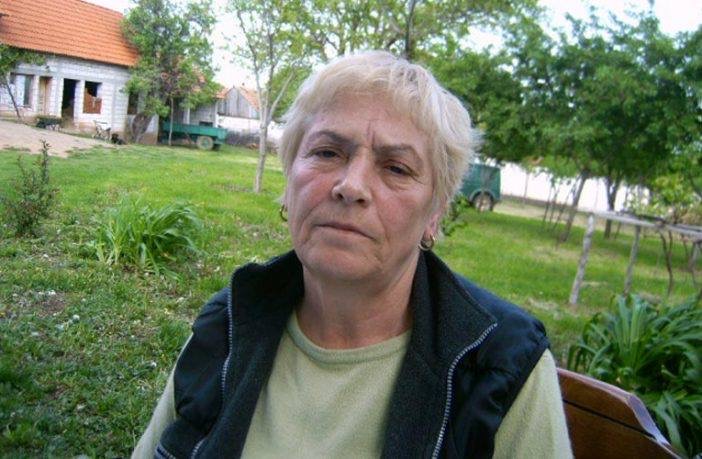
Photo: Marte Tunaj. Credit: Musa Sabedini
 WAR AND PEACE
Leave a comment