
Assessing Legal Foundation, Mandate Legitimacy, Interaction with Global Peace Architecture, and Implications to International Legal System.
Sebahate J. Shala
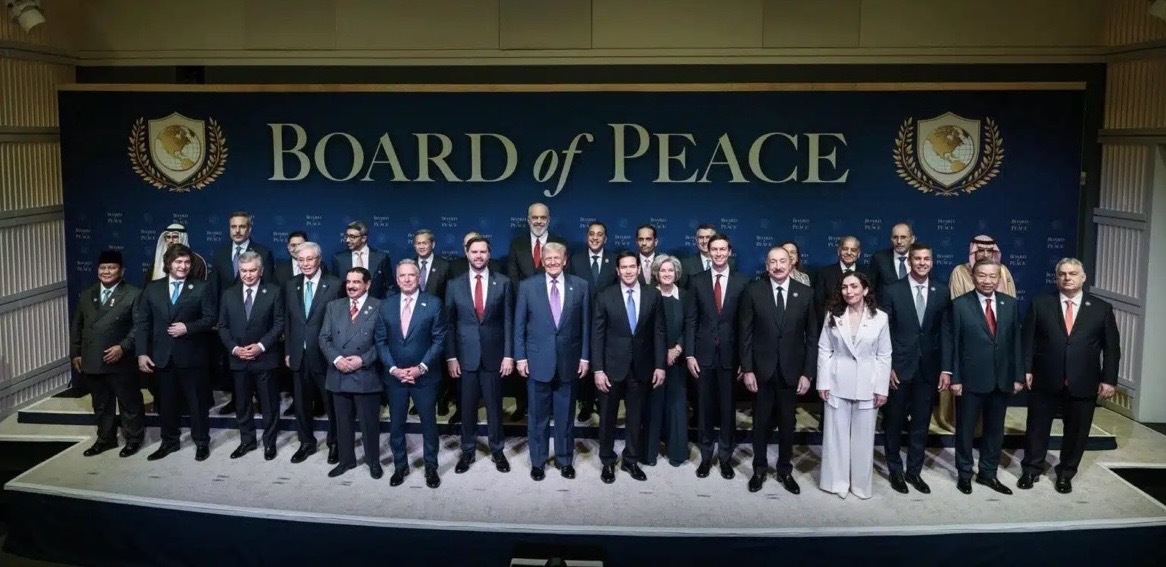
The Board of Peace represents a novel, controversial institution in international system[1] —featuring a non-orthodox approach of organizational foundation and occupying a liminal institutional space: partially legalized, politically consequential, yet constitutionally thin.[2] Introduced as an operational mechanism connected to Gaza interim administration, the newly-created organization has gradually sought to position itself as a global peace instrument, extending its ambition to perform peacebuilding and conflict resolution roles on the world stage. While its emergence reflects contemporary efforts toward the institutionalization of peace, “its legal status remains ambiguous, its integration with established international law instruments is partial, and its normative legitimacy is contested.”[3]
Besides, the Board of Peace structural arrangements and membership rules are incompatible with accepted standards of collective governance and organizational independence; its proposition to act globally, on the other hand, risks creating parallel peace and security order, thereby challenging international peace and security structures and undermining the foundational tenets of international law. It remains debatable, though, whether the Board seeks to operate as a supplementary body within existing collective security system or as a rival architecture diverting authority away from the United Nations and traditional multilateral institutions.
This article examines the legal status of the Board of Peace through the lens of international law, including its legal foundation, mandate legitimacy, governance structure, and the relationship with the United Nations’ system and enforced legal framework. Using available literature, supported by international legal instruments, the article highlights legal deficiencies and structural challenges, arguing that the Board fails to meet the recognized legal requirements necessary to gain the status as an international organization and a subject of international law, positioning instead at the intersection of executive foreign policy or soft-law mechanisms.
What is the Board of Peace: Legal and Political Discourse
The Board of Peace has caused concern among the political and legal community regarding its legality and legitimacy, institutional design and operational model, and the relationship with established global peace architecture and rules-based international system (Musangwa, 2026; Santos, 2026). The key criticism surrounding the debate centers around legal foundation, mandate legitimacy, power structures, and conformity with international law and mandatory regulatory framework. First, the constitutional basis is ambiguous as neither of foundational agreements clearly articulate the organization’s legal status and scope of operations. Consequently, the doctrine of legal personality remains indeterminate, posing queries of whether the Board constitutes a subject of international law, endowed with rights, duties, and powers and capacity for action (Moitra, 2026; Musangwa, 2026). Second, the Board of Peace’s organizational structure—showcasing a centralized system with a chair-centered authority—clashes with core principles of international organizations, while casting doubts about the ability to generate a distinct will, independent from that of collective and the founding members (Moitra, 2026; Santos, 2026). Besides, the governance system and membership rules—linked to financial contribution—risks normalizing parallel structures organized around centralized powers, weakening multilateral legitimacy and deepening fragmentation if legitimacy and inclusion are treated as optional (Sidlo, 2026). Furthermore, the absence of a defined mandate, combined with the United States’ (U.S.) assertion to grant it a global peacebuilding role, directly challenges the United Nations’ (UN) system and the Charter’s foundation, imperiling collective security structures while testing attributes of sovereignty, equality, noninterference, and consent (Musangwa, 2026; Santos, 2026). Moreover, the Board’s mandate in Gaza implicates occupation, self-determination, and “two-state solution” framework, for it intends to install an administration without Palestinian participation and consent, and in violation of international legal acts recognizing the Palestinian right to self-government as undeniable (Brivati, 2026).
The Board of Peace refers to an “international organization” proposed and institutionalized through 2025-2026—under the patronage of President Donald J. Trump—subsequent to the U.S. sponsored comprehensive peace agreement ending the Israel-Hamas conflict in the Gaza Strip (Musangwa, 2026). Advocates described as a “nimble peacebuilding initiative” emerged in response to institutional paralysis within existing global governance structures, inexplicitly pointing to the UN Security Council’s (UNSC) perceived inability to address the most pressing global issues, notably the prolonged conflict in Gaza (Santos, 2026). Critics view it as an alternative mechanism—designed to undermine or marginalize the UN system, creating parallel peace and security order, circumventing international law, and channeling the funding away from the broadly-supported international agencies and organizations (Better World Campaign, 2026; Dumitriu, 2026). Illustrating a selective application of the rules-based international system, the Board, as experts argue, carries an inherent tension. Rather than strengthening the UN, as the U.S. administration stated, the organization introduces a parallel locus of authority that tacitly challenges the Security Council—and potentially aims to compete with it, gradually displacing deliberative multilateralism and potentially replacing it with executive-style peace and security management (Belhaj, 2026). Though anchored in the UNSC resolution, the Board’s institutional design allows the U.S. under Trump administration—as chief political sponsor—to influence international peace and security governance outside the traditional veto-bound, procedurally constrained dynamics of the UNSC, thereby endangering the authority of global peace institutions and enforced regulatory system (Id.). Institutionalization of peace has traditionally been pursued through treaty-based organizations and multilateral efforts, and while experimentation is generally welcomed, yet, any institutional foundation should follow the standard rules of international organizations and act in accordance with international law; contrarily, its legality and legitimacy will be questioned (Brivati, 2026; Santos, 2026).
Constitutional and Normative System: The Constitutive Act and Legal Personality—Contested
The international organizations, denoting international intergovernmental organizations, are codified as entities established by a treaty or other international agreement governed by international law, possessing international legal personality, a permanent set of organs, and operating under international law (International Law Commission, ILC, 2011). Doctrinal assessment emphasizes defined mandates and powers, membership rules and participation, decision-making autonomy, privileges and immunities, and mechanisms of accountability, among other criteria (Santos, 2026). The ILC highlights international responsibility as a central feature—associated with legal personality—for only entities with recognized legal status account for subjects of international law; accordingly, they maintain responsibility for internationally wrongful acts and potential violations of human rights obligations (2011). Importantly, the international organization must be capable of generating an objective legal personality—separate and independent from that of its constituencies and those who created it—and an international legal personality in relation to non-participating members (Enkhee, 2020). Yet, the accountability gap (the allocation of responsibility and the attribution of conduct), and the concept of legal personality remain unresolved and subject to controversies (Portmann, 2010; Wood et al, 2011). Notwithstanding disagreements about whether a subject of international law should possess, under what conditions can acquire it, and what are legal consequences relating to that status (Portmann, 2010), research indicates that an entity necessitates a legal personality when exercising certain functions on international level (Enkhee, 2020). As the International Court of Justice (ICJ) ruled in the Reparations for Injuries Suffered in the Service of the UN advisory opinion (1949), an international organization is subject of international law, possesses international legal personality, recognized rights and duties, and bears capacity to enforce contracts and institute legal proceedings (Wood et al, 2011). The principle of legal personality is regarded essential for organizational effectiveness (Sharma, 2026); it exists within both municipal and international laws, and implies the “means by which a particular legal system attributes rights and obligations to an entity separate from and independent of those who created it, or are part of it.” (Weissberg, 1961)
The constitutive instrument and legal personality are considered as main elements of international organizations (Schmalenbach, 2020). In this sense, they are seen as critically important to determine the Board of Peace’s international legal standing. Arguably, this mechanism does not satisfy the recognized legal requirements governing international organizations, as set forth in the Vienna Conventions on the Treaty Law and upheld by international legal and judiciary bodies (Moitra, 2026; Santos, 2026). Its international legal personality remains contested, its legal foundation—dubious as neither of constitutive acts clearly define institutional powers and scope of operations, not mentioning the absence of a formal constitutive treaty negotiated and ratified by states (Musangwa, 2026). The available literature partially relies on the UNSC resolution to ascertain the Board’s constitution—which may be used as primary constitutive instrument, with the Charter as subordinating act (Moitra, 2026; Santos, 2026). There are strong arguments, as Moitra notes, to support this assumption: a) the UNSC resolution 2803 expressively “welcomes the establishment of the Board of Peace as transitional administration,” suggesting its de facto establishment through endorsement; b) legally, the resolution forms an international agreement, and considering that there was no previous document creating the Board before, it may be regarded as principal constitutive act—with the Charter as internal law; c) the UNSC resolution bestows the Board with many authorizations and activities, including the task to enter into necessary arrangements to achieve the stated objectives, strongly indicating, the argument follows, that the resolution represents the primary source of authority—with the Charter as derivative or necessary arrangements (2026). However, there is a strong case to believe that the Board of Peace derives its authority from the Charter, as well. For, according to Moitra, the resolution 2803 lacks the level of specificity generally required to prescribe organizational functions, composition, voting procedures, institutional setting, and financial arrangements compared to previous UNSC resolutions that set up international organizations in the past (Id.). The resolution 2803 faced criticism connected to language ambiguity, vagueness, and lack of clarity over the Board’s structure, composition, and terms of reference, as well as its relationship with the UN and the binding legal acts (Brivati, 2026; UN, 2026). Moreover, the UNSC explicitly leaves the task of setting up an international organization to participating members, implying that it did not—nor intended to create such an entity in the first place (Moitra, 2026). Nevertheless, there is uncertainty whether the Charter is indeed the organization’s organic act. For legally, as experts argue, it does not represent a treaty negotiated and ratified by states, indicating that the Board is neither created by the UN or any recognized international organizations, nor it derives its authority from the UN Charter, international customary law, or collective state practice. Instead, it’s self-constituting (Logroño Narbona, 2026).[4]
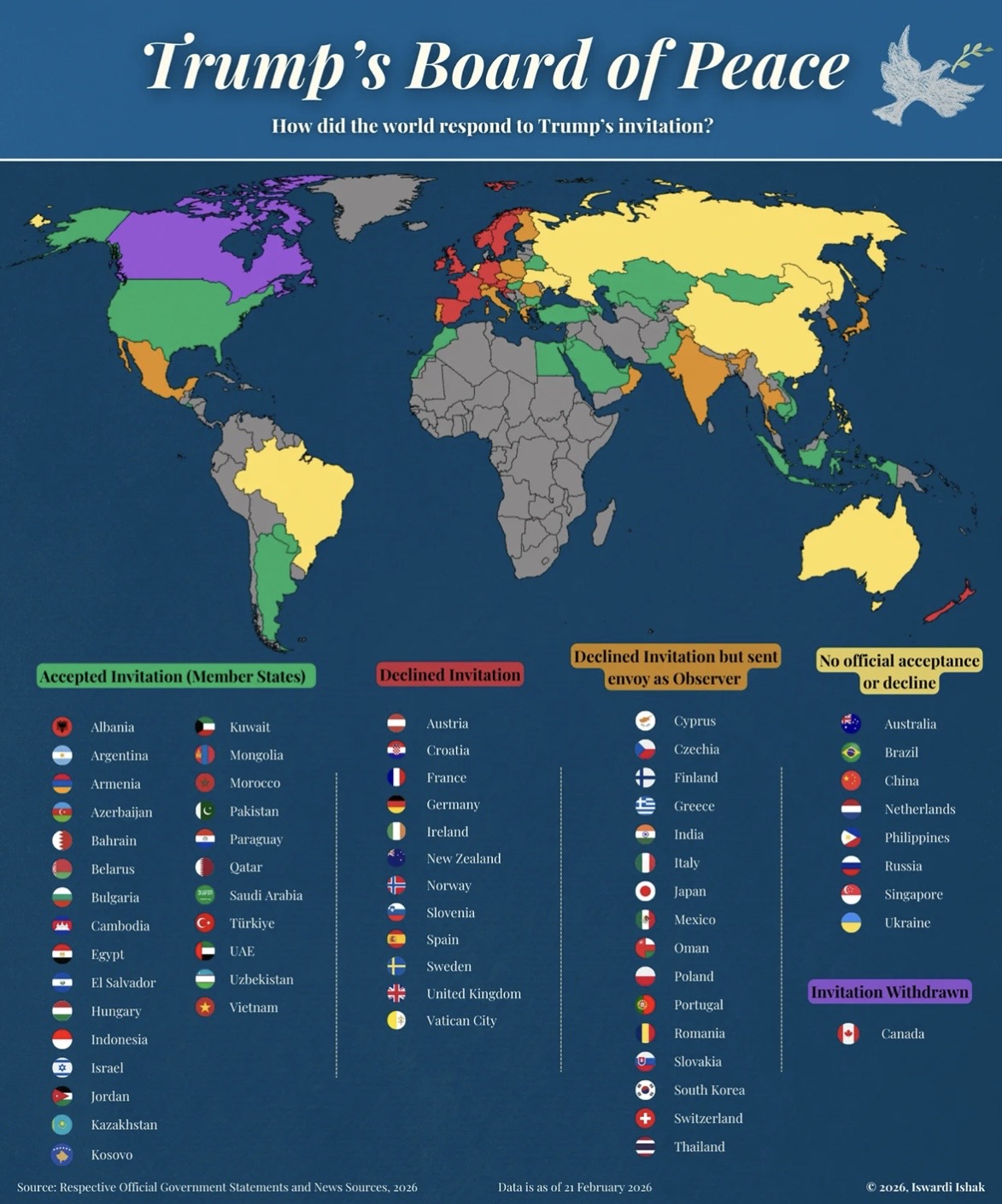
The international legal personality—referenced to both legal and political recognition—is generally invoked through a constitutive treaty or an international agreement, providing an entity with autonomous functions and capacity for action (Musangwa, 2026). The Board of Peace’s legal personality is subject to political and legal debate in absence of a formal legal constitution, casting doubts of whether it represents an international organization and a subject of international law (Moitra, 2026; Musangwa, 2026). Although the Charter expressly states that the Board possesses international legal personality, expert analysis evidenced flaws respective to legal criteria pertaining to the regime of international organizations. First, an entity does not become a subject of international law simply by declaring it so (in self-declaratory or self-executory way); typically, legal personality is conferred as a necessity to perform certain functions that could not be done without it (Santos, 2026). Second, the Board’s Charter does not create mandatory legal obligations upon participating members as opposed to a treaty; instead, its mandate is framed predominantly in facilitative, coordinative, and advisory terms; third, there is confusion about whether the Charter constitutes a treaty as under the Vienna Conventions, enforcement warrants signature and domestic approval from a broad majority of states (Musangwa, 2026). If the Charter is framed as a treaty, then it should abide with standard rules of treaty formation; the signature alone, as Santos specifies, “does not normally create binding obligations.” (2026) In this case, the Charter’s enforcement demands domestic ratification or approval of three out of 28 signatory members. Hitherto, only two countries have ratified it. With that being said, if the Board of Peace seeks to administer territory, coordinate security forces, or manage humanitarian assistance in Gaza, and possess international subjectivity and responsibility, it necessitates some degree of legal capacity; for international responsibility depends centrally on whether or not this body has legal personality (Moitra, 2026, Santos, 2026).
Legal Personality: Challenged in Absence of Constitutive Treaty and Autonomous Will
As noted in the above section, the UNSC language is partially used as reference to understand whether (or not) the Board of Peace holds international legal personality. Lawfully, the UNSC can create legal personality through constitutive or declaratory form (Santos, 2026). A constitutive interpretation would suggest that the Security Council—under provisions of Chapter VIII—can create international legal personality through resolution alone as occasionally acted in the past by establishing subsidiary organs or endorsing transitional administrations to maintain or restore international peace and security. Kosovo and East Timor are often used as comparative studies (Brivati, 2026; Santos, 2026). Such temporary arrangements are normally ingrained in the UN system, grounded in the UN Charter, and operate within a delegated authority under the Security Council’s or General Assembly’s resolutions, which define their mandates, powers, limitations, and accountability mechanisms. Importantly, this legal personality, where recognized, is functional and derivative rather than autonomous capable of acting independently from the UNSC authorizations (Santos, 2026). But, the Board is neither a UN organ nor a traditional regional agency, it is a “sui generis” body that, unlike the aforementioned administrations, operates outside the UN system and actual peacekeeping and transitional administration models without mandate specificity and internal oversight (Brivati, 2026). Though positively referenced in the UNSC resolution, the Board of Peace is an external entity that remains legally separate—with the authority dependable on legal basis acquired from consent or treaty—and on strict adherence to the terms of the UNSC endorsement (Santos, 2026). This excludes the possibility of a constitutive creation, suggesting instead a declaratory recognition. The UNSC, as declarative explanation implies, welcomes the creation of an (external) entity, as it acted in the case of the Board, recognizing that it needs limited functional capacity to perform specific tasks within a defined mandate (Id.). Yet recognition alone, while may provide some political legitimacy, and in limited circumstances a degree of legality, it, according to Santos, does not create a general legal personality except acknowledging that functional capacity for specific authorizations and temporary limits. In the Board of Peace context, legal personality is best understood as declaratory; it’s instrumental and circumscribed to limited capacity rather than autonomous or permanent, and does not infer an open-ended institutional status nor does it legitimize expansion beyond authorized mandate. As the author puts it, “International law does not recognize a general power of the Security Council to create self-standing governance bodies capable of operating beyond the contours of the authorizing resolution.” (2026)
The legal personality denotes an entity’s capability to exercise an autonomous will—separate from the collective will of the member states and those who created it (Schmalenbach, 2020). Debatably, the constitutional design—exhibiting a centralized system with the chair as a supreme authority over all governance and operational activities—poses a key existential challenge for the Board of Peace’s legal personality, questioning its capacity to form a distinct and autonomous will (Moitra, 2026; Musangwa, 2026). This, as Moitra explains, can occur for several reasons. First, all decisions are subject to discretionary powers of one state and one individual despite the decision-making process, as the Charter specifies, requires a majority vote; second, all member states, including members of executive organs, are nominated and terminated unilaterally at the chair’s will; third, membership rules depend entirely on alignment with and accession to the Trump’s worldview and political will (2026). Besides, the Board’s governance system, membership rules, and operational procedures centered around informal and personalized authority tend to erode accepted norms of collective governance and institutional autonomy, while complicating the formalization of principles of rule of law, transparency, accountability, and collective action—crucial for sustaining institutional authority and compatibility with global rules-based system (Musangwa, 2026). Apart from that, its multi-layered and fragmented authority risks blurring institutional responsibility since the decision-making power is distributed across bodies with overlapping mandates, rendering it difficult to determine the attribution of accountability. Weak transparency alongside lack of clearly defined governance norms compound this problem, diminishing further the Board’s political authority and legitimacy (Santos, 2026). Most critically, the autonomous operation model—largely driven by a single state and individual to manage conflicts worldwide—directly threatens the UNSC authority and multilateralism, while testing the limits of the UN Charter’s system and overarching international law (Brivati, 2026). Lastly, the Board of Peace’s functioning model may have profound implications for future peace governance and peacebuilding efforts—far beyond Gaza—as the decision over which conflicts warrant intervention and on what terms, according to Sidlo, rests largely in President Trump (2026). The long-running dispute between Egypt and Ethiopia over the Grand Renaissance Dam, which Trump has expressed interest in addressing, can be a credibility test for the Board—whether it respects the underlying rules of balanced representation and inclusiveness or not. As the author puts it, “Egypt sits on the Board; Ethiopia, so far, does not. This asymmetry highlights a structural challenge: when membership includes only one party to a dispute, questions of neutrality become unavoidable.” (Id.)
International Subjectivity: The Board of Peace—International Organization or Not?
The legal classification of an entity is crucial not only to determine its international legal existence, but also to define the framework of rights and obligations, privileges and immunities, functional capacity, international responsibility, and allocation of accountability (Santos, 2026). The fulfillment of standard legal rules is necessitated for the attainment of the status of an international organization. As broadly argued, the Board of Peace does not meet legal requirements prescribed to international organizations, rendering its categorization a complicated and difficult endeavor while limiting its legal standing under international law (Moitra, 2026; Santos, 2026). Therefore, at present, it cannot be treated as a “fully constituted international legal institution.” For, as Musangwa underlines, “its legal personality remains indeterminate, its authority is primarily political rather than juridical, and its relationship with binding international legal instruments is weakly articulated. These legal deficiencies raise serious concerns regarding its legitimacy, accountability, and long-term effectiveness.” (2026) A weak constitutional basis and unclear legal personality, coupled with partial integration into international legal system, raise questions of whether the Board constitutes an international organization with legal personality, a soft-law mechanism with persuasive authority, or a political initiative operating outside traditional legal structures (Id.). Presented as a selective coalition of the willing states, expert analysis places it at the intersection of executive foreign policy or soft-law bodies, part state initiative, part multilateral consensus, operating primarily through political coordination rather than legal delegation (Musangwa, 2026; Santos, 2026). Unlike treaty-based organizations constituted through international agreement, political forums—affiliated with soft-law power—are founded by resolution or declaration, and as opposed to traditional international law rules adopted through collective leadership and explicit consent of states/other actors, soft-law decisions are not legally mandatory to the third states or international system, nor can lawfully displace existing obligations under the UN Charter or other peremptory norms (Santos, 2026). The coalition-based characterization may have significant consequences for the Board such as restricting its legal authority, the capacity to engage in territorial administration, security governance or binding coordination without valid consent or explicit UN authorizations, concluding treaties or entering into agreements, bringing international claims or enforcing legal obligations to third states, and bearing responsibility for potential violations of law; most importantly, political forums lack independent legal personality and possess no autonomous capacity under international law (Musangwa, 2026; Santos, 2026).
Herein, if the Board of Peace seeks to operate on the world stage, it should clarify its statutory authority and legal nature, develop a clearer and comprehensive legal infrastructure, transparent procedures, and institutional safeguards together with definition of its mandate and embracement of good governance principles (Musangwa, 2026). Equally important is the charter ratification, enabling it to acquire a legal status for acting internationally. Because, without a treaty in force, as Santos emphasizes, there is no legal personality to invoke, no institutional capacity to rely upon. “Ratification is therefore not a technicality; it is the legal threshold, separating political initiative from juridically cognizable institution.” (2026) Nonetheless, the core question, according to Belhaj, is not legal codification that can advance gradually, as the Board’s evolution into a sustainable institution capable of acting without violating legal rules and multilateral authority that make peace governance meaningful. “If the Board becomes a vehicle for hegemonic shortcutting—managing conflict without resolving its legal foundations—it may succeed tactically, while failing institutionally, competing with its own creator and weakening the already fragile architecture of collective security.” (2026)
The Board of Peace’s Relations with Collective Security System: Competitive or Complimentary?
The Board of Peace poses a challenge for global governance structures and mandatory legal frameworks stemming from unclear constituent instrument and conflicting mandates under its Charter and the UNSC resolution (Brivati, 2026; Musangwa, 2026). The Board is a state-and-crisis driven initiative—incepted as part of comprehensive peace plan on Gaza conflict, following “Trump Declaration for Enduring Peace and Prosperity” signed in October 2025 (Musangwa, 2026). Its initial mandate, as the UNSC resolution 2803 stipulates, was to overseeing transitional governance and security administration in Gaza along with implementation of humanitarian and reconstruction activities leading to a permanent solution of the Palestinian situation (UNSC Res. S/2803/2025). Conversely, the Charter avoids any references to Gaza, vesting the Board with global peacebuilding and conflict-resolution functions, including the task to promote stability, restore dependable and lawful governance, and secure enduring peace in areas affected or threatened by conflict (2026). While the UNSC resolution is time-bound and context specific, the Charter, on the other hand, is territorially open-ended suggesting a universal application in terms of peace and security agenda. If the Board extracts mandate legitimacy from resolution 2803, which is not yet defined, then its legal capacity, as diplomats maintain, should remain temporary, functionally limited, and territorially confined to Gaza—directed toward realization of the Palestinians’ right to self-determination (Dumitriu, 2026). Therefore, any attempt for broader jurisdiction, institutional permanence, or unilateral renewal without new UNSC authorizations is deemed unlawful, “ultra vires,” risking the encroachment of the UNSC authority, the UN Charter, and international legal system (Santos, 2026). International law, as Santos explains, acknowledges, at occasion, the UNSC responsibility to endorse or cooperate with non-UN entities, but it does not support the notion that it can outsource its primary responsibility wholesale to a structurally independent body without retaining oversight, or permit parallel peace-and-security structures that substitute selective governance for collective legal authority. “A body may not lawfully convert a limited Security Council mandate into a standing institutional role applicable to unrelated conflicts. Doing so would amount to mandate self-extension […]. Delegation, where permitted, must remain bounded, reviewable, and revocable.” (Id.)
In addition, the Board of Peace’s proclaimed ambition to act internationally may have systemic consequences, endangering the UN constitutional design while weakening collective security system in attempt to create parallel peace and security order. The question posited by experts is whether it intends to operate as a complementary body within existing global system or as a rival architecture that shifts the center of power away from the UN (Santos, 2026). The answer is subject to future debate. While there is no formal trespassing of the UN Charter, the institutional structure, coupled with the Charter’s unequivocal reference to the UN perceived ineffectiveness, arguably underscores that the Board is positioned as an alternative to established multilateral system (Better World Campaign, 2026; Brivati, 2026). Some even portray it as a “wholesale alternative to the UN.” (Moitra, 2026) The Board’s institutional arrangements, according to Dumitriu, directly challenge or marginalize the UN role by creating parallel peace and security governance, placing strategic control outside of the UN organs, reinterpreting collective security in a minimalist way, and ultimately weakening the UNSC’s centrality in practice (2026). Apart from that, the competing mandates and overlapping competencies may cause institutional rivalry, uncertainty over norm application, and selective compliance by states; in context of peace and security, meanwhile, fragmentation diminishes collective security, dilutes accountability, and enables political actors to forum-shop among institutions to avoid legal constraints (Musangwa, 2026). Notwithstanding, any parallel institution, as Brivati indicates, faces a legal and legitimacy gap: the UN derives its legitimacy from a near-universal representation and the Charter authority, the Board, by contrast, is a selective membership organization with a non-UN Charter mandate (2026). As such, it cannot be a substitute or replacement for the United Nations due to fundamental differences respective to legal mandates and functional procedures (Better World Campaign, 2026). First, the UNSC retains primary responsibility for the maintenance of international peace and security based on the UN Charter—a treaty universally accepted and ratified, therefore, it cannot be replicated by a separate organization asserting a similar mission (Id.). Second, unlike the UNSC’s mandatory acts enacted through Chapter VII, the Board’s decisions apply only to participating members, meaning that without consent, recognition, or adherence to the UN system, its authority remains internal and contractual rather than public and universal—attributable to an autonomous international person (Santos, 2024). Third, the enforcement of acts. While the UNSC can impose sanctions and authorize the use of force across jurisdictions, the Board, on the other hand, cannot create enforcement regimes with legal effect to international system (Better World Campaign, 2026). Most importantly, contrary to the UN, the Board of Peace is not a universal body and does not rely on broad multilateral consensus to act; it is structured as a stand-alone organization designed to move quickly among a limited group of aligned participants (Id.).
Besides, the advocates’ assertion to a coercive peace-enforcement mandate would risk the infringement of international legal rules regulating peace and security governance, which comprise preventive diplomacy, peaceful settlement of disputes, international humanitarian obligations, and, where necessary, the enforcement action through collective leadership (Musangwa, 2026). Other than that, a broader authority on peace and security matters implicates attributes of sovereignty, noninterference, accountability, and consent—applicable in cases of external intervention, territorial administration, or a binding UNSC action—without offering a legal substitute for the UN Charter and international law (Brivati, 2026). Moreover, the proposition for a broader role conflicts with the “third-party rule,” since the Vienna Conventions on the Law of the Treaties neither impose obligations nor confer rights upon third states without their consent (1969; 1986). This, according to Santos, reflects a foundational aspect of state sovereignty: legal obligations arise from consent, not from institutional design or political influence (2026). From a legal perspective, external intervention, territorial administration, or security governance demand a voluntary consent or invitation letter from affected state along with explicit authorizations from the UNSC, on contrary, they are deemed illegitimate (Brivati, 2026). The Board of Peace, as Musangwa suggests, raises an inherit tension in that it seeks to operate within normative system, but without clear formal integration into the current legal regime (2026). While its stated objectives broadly align with underlying global peace and security instruments, i.e., conflict prevention, stabilization, and post-conflict recovery, its legal interaction with them, the author follows, remains underspecified. That is, the Board is not structurally embedded within the UN system, nor is it clearly subordinated to, or supervised by established international bodies; furthermore, there is no constitutive legal instrument explaining how this body interacts with treaty-based organizations, peacekeeping operations, or judiciary institutions (Id.).
The Board of Peace in Gaza: In Violation with International Law
Admittedly, as the White House righteously argues, the UN has vast unfulfilled potential toward global peace, referring to its ineffectiveness, deadlocks, and failures to respond to the most urgent matters. Most notably, the UNSC’s inability to generate a permanent solution to the prolonged Palestinian situation, let alone that no member state has ever been expelled from the organization for repeatedly violating its Charter (Sidlo, 2025). The UN faces persistent systemic and institutional challenges resulting from the inability to execute long-standing reforms. Herein, the Board of Peace can enter the game, theoretically offering solutions to situations where the UN is deliberately cautious, streamlining the decision-making process while avoiding procedural constraints of universal multilateralism (Better World Campaign, 2026; Cravo, 2026). Moreover, Gaza situation justifies untested measures and ideas if promising a final settlement (Dumitriu, 2026). The Board can serve as a credibility test—whether it can deliver results without marginalizing traditional multilateral institutions. If succeeding in its mission, it, as some propose, can serve as a complementary body for rapid-response—without power to replace the UN momentarily. For, at present, the Board cannot provide legitimacy on global scale such as authorizing peacekeeping missions or imposing longtime sanctions—duties under exclusive authority of the UNSC (Better World Campaign, 2026). The Board of Peace sustainability as an international institution, according to Belhaj, will depend less on legal matters and the founding moment and more on its capacity to evolve from hegemonic expediency into a rule constrained institutional practice oriented toward ending occupation in Gaza rather than stabilizing it. “Absent such evolution, the Board risks entrenching questionable governance without sovereignty, hollowing out Security Council authority, and accelerating the drift toward fragmented, plurilateral peace and security management under hegemonic sponsorship.” (2026) Regardless of its fragile institutional legality, the Board reflects enduring aspirations within international law intended to move beyond reactive crisis management toward preventative diplomacy, transitional governance, and sustainable peacebuilding—concordant with contemporary developments emphasizing early engagement, civilian protection, and post-conflict institutional reconstruction as core components of peace and security (Musangwa, 2026).
Last but not least, the Board of Peace role in Gaza implicates the law of occupation, self-determination, and human rights, as well as principles of “two-state solution,” representativeness, and inclusiveness (Brivati, 2026; Santos, 2026). Gaza is internationally referred to as occupied territory and effective control—subject to layered legal systems; henceforth, any external administration, as experts suggest, must take into considerations its legal status and constraints deriving from occupation law and the regime of human rights and civilian protections (Santos, 2026). Most importantly, any interim administration must be oriented toward formalization of Palestinian self-governance within a reasonable timeframe, based on the “two-state solution,” and in compliance with the ICJ decisions and the UN resolutions affirming the Palestinians’ right to self-determination as “inalienable” (Brivati, 2026). Plausibly, the Board fails to meet such premises. First, this mechanism imposes a provisional governance without Palestinian participation and consent, conditioning the Palestinian statehood to the outcome of reforms and redevelopment efforts in Gaza (Id.). Conditionality, as Santos points out, becomes problematic as it effectively subordinates self-government to externally defined conditions without clear pathway for political settlement by concerned populations (2026). Second, the Board of Peace displays a selective and asymmetrical approach, raising concerns about the absence of UN mandates and the Palestinian Authority (PA) representation in the implementation of Gaza peace plan (Aouardji, 2026). While the PA was reportedly neither invited nor joined the Board and its executive bodies, including the Executive Board on Gaza, Israel’s participation with the task to oversee transitional administration in Gaza is problematic considering its violation of international law and international humanitarian law over the past decades, particularly since October 2024 (Id.). The limited agency and the exclusion of Palestinian representatives—even under justifications of stability or neutrality—according to experts, while it poses serious legal queries, risks transforming a provisional mandate into a prolonged external control (Santos, 2026). Moreover, the UNSC resolution 2803 fragments the occupation law accountability; it incepts a new actor and charges it with governance and security tasks, potentially allowing Israel to claim relief from some of its duties as Occupying Power, and creating ambiguity in legal responsibility under the 1949-Fourth Geneva Convention (Brivati, 2026). Finally, resolution 2803 omits references to UN foundational framework on Gaza, including the “two-state solution,” inadmissibility of occupation, designated borders, settlement illegality, and the UN-led humanitarian authority; it remains silent on Israel’s commission of war crimes, crimes against humanity, the crime of starvation or genocide, and avoids the ICJ and ICC’s advisory opinions and temporary measures on respective matters (Id.).
Conclusion
This article analyzed the legal status of the Board of Peace through the lens of international law, discussing its legal foundation, mandate legitimacy, institutional arrangement, and the relationship with global governance and statutory framework, highlighting findings as summarized below. The Board poses an innovative, questionable mechanism in contemporary peace practice—surfaced as part of the United States’ sponsored comprehensive plan on Gaza. Its emergence reflects dissatisfaction with the United Nations and multilateral approaches toward WORLD PEACE!!!, respectively the Security Council’s inability to respond to the most urgent global concerns, namely Gaza crisis. Its materialization is understood as part of broader peacebuilding efforts and stabilization measures intended at institutionalization of peace.
The Board of Peace’s constitutional ground and legal existence remain subject to debate, calling into question its subjectivity under international law. This body falls short in meeting legal criteria required to obtain the status of an international organization in accordance with law. Its legal foundation remains constitutionally fragile, its mandate ambiguously constrained, and its accountability architecture underdeveloped (Belhaj, 2026). Described as a selective coalition of the willing states, the Board is increasingly viewed as an extensive foreign policy or soft-law instrument operating primarily through political consent rather than legal obligation. Unlike traditional international organizations founded by a treaty and through multilateral consensus, the Board is a state-driven enterprise—largely influenced by one state and one individual to rule global affairs—although initially conceived to oversee provisional administration in Gaza.
The lack of a clear mandate, combined with proponents’ statements to provide it with a global role, poses systemic consequences, threatening the erosion of the UN system, the Charter’s foundation, and international legal regime. Thereof, if the Board of Peace aims to operate as a standing institution, with authorizations to act on the world stage, it needs to clarify its formal statutory basis, legal personality, as well as defining powers and mandates, and the relationship with the United Nations. Parallel to that is important ratification of the charter, development of a sound legal and normative infrastructure, and adherence to rules and principles of international law—central for sustaining institutional authority and compatibility with legal regime (Musangwa, 2026). Addressing allocation of responsibility and attribution of conduct, forming transparent and representative governance structures and integrating into existent accountability and coordination framework is critical to avoid responsibility and accountability gaps (Id.).
And ultimately, defining relations with the United Nations—whether the Board of Peace seeks to act as a rival or a complimentary mechanism within the existing peace and security system. If the UNSC resolution 2803 amounts as principal constitutive instrument, then the Board’s authority must be strictly limited to Gaza and directed toward a defined end-state—realization of Palestinian self-rule, with guarantees of self-determination and meaningful local participation as indispensable (Santos, 2026). Any attempt to mandate expansion, renewal, or institutional permanence would require a new Security Council resolution or explicit authorizations, it must be embedded in the UN Charter, and consented by concerned populations; otherwise, it will be considered unlawful (Id.).
The Board’s sustainability as a global peace instrument demands a substantive transformation, conversely, it risks remaining a symbolic or soft-law initiative, with a peripheral role, and with low chance to make a meaningful contribution toward strengthening global governance and legal infrastructure (Musangwa, 2026). Gaza will be the first litmus test—whether it will act pursuant to international law and whether it will succeed in its mission without corroding multilateral rules-based order (Sidlo, 2026). Early reporting, showing the demolition of the UN facilities and the challenging of its mandate in occupied East Jerusalem by Israeli forces, is discouraging. As Sidlo puts it, “When UN agencies can be constrained or dismantled with impunity, the authority of the system they represent is correspondingly diminished.” (2026)
Work Cited:
Aouardji, H. 2026. Board of Peace or “Trump’s World”? Institute De Relations Internationales Et Strategiques.
Belhaj, F. 2026. Legalized Power? The Board of Peace and the Governance of Conflict. Policy Center for the New South. pp-06/27.
Better World Campaign. 2026. The Board of Peace: What We Know About Its Role, Reach and Limits. Available at: https://betterworldcampaign.org/peace-and-security/the-latest-on-the-board-of-peace-what-we-know.
Board of Peace. “The Board of Peace Convenes Inaugural Meeting,” February 19, 2026.
Brivati, B. 2026. International Law and the Trump Board of Peace Charter. Arab Center Washington.
Cravo, T. A. 2026. Peace with an Entry Fee: Trump’s Board of Peace as a Blueprint for Ending Wars. Peace Research Institute Oslo.
Dumitriu, P. 2026. The Status of the Board of Peace for Gaza in International Law. DIPLO.
Enkhee, T. 2014. International Legal Personality of International Organizations: International Law Perspective. National University of Mongolia.
International Law Association Committee. 2002. International Law Commission: On Responsibility and Accountability of International Organizations.
Logroño Narbona, M. 2026. Members Only’ Reconstruction: How the Board of Peace is Undermining International Law. Development Today.
Moitra, S. 2026. The Charter of the Board of Peace: A Dubious Legal Personality and a Regressive Peacebuilding Mandate Unbound by Law. OpinioJuris.
Musangwa, J. 2026. The Board of Peace in International Law: A Critical Legal Analysis in Light of International Legal Instruments. Jonathan Initiative for Law and Human Rights Newsletter. LinkedIn: https://www.linkedin.com/pulse/board-peace-international-law-critical-legal-analysis-musangwa-bifff.
Portmann, R. 2020. Legal Personality in International Law. Cambridge University Press. 382. ISBN 9780521768450.
Santos, E. A. 2026. Board of Peace vs. International Law. DEL.
Sidło, K. 2026. The Board of Peace, Gaza, and the Cost of Being Inside the Room. EUISS.
Schmalenbach, K. 2020. International Organizations or Institutions, General Aspects. Oxford Public International Law. Last Updated in October 2020.
Sharma, P. 2026. The Legal Personality of International Organizations Under International Law. International Journal of Legal Studies and Social Sciences. Vol 4, Issue 1, pp274-279.
United Nations. Security Council. 2025. “Resolution 2803 (2025) Adopted by the Security Council at its 10046th meeting, on 17 November 2025.” S/RES/2803. 2025. “Security Council Authorizes International Stabilization Force in Gaza, Adopting Resolution 2803 (2025).” SC/16225. 2011. International Law Commission. Draft Articles on the Responsibility of International Organizations. 2011. Yearbook of International Law Commission, Vol. II. Part Two. 2005. Vienna Convention on the Law of Treaties 1969. Treaty Series, Vol. 1155, pp. 331. 2005. Vienna Convention on the Law of Treaties Between States and International Organizations or Between International Organizations 1986. 1945. Charter of the United Nations.
Weissberg, G. 1961. The International Status of the United Nations. New York: Oceana Publications, and London: Stevens and Sons Ltd. pp. xii, 228.
White House. 2026. “Statement on President Trump’s Comprehensive Plan to End the Gaza Conflict.” 2026. “President Trump Ratifies Board of Peace in Historic Ceremony, Opening Path to Hope and Dignity for Gazans.”
Wood et al. 2011. Legal Responsibility of International Organizations in International Law. Chatham House.
Endnotes:


Leave a comment